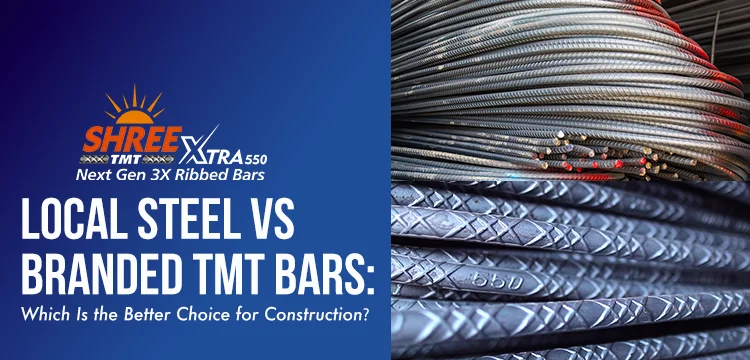
Local Steel vs Branded TMT Bars: Which Is the Better Choice for Construction?
Table of Contents:
Ask ten people what makes a building strong, and most will talk about the design, the cement grade, maybe the foundation depth. Almost nobody talks about the steel running through the walls and slabs, and that’s strange, because it’s the one material doing all the tension work. If it fails, everything else you got right stops mattering.
Two Very Different Manufacturing Stories
Local or unbranded TMT bars usually come out of smaller rolling mills with barely any process control. One batch might hold up fine. The next, rolled from a slightly different mix of scrap, might not. There’s no consistent lab testing for yield strength or elongation, and once the bar leaves the mill, nobody can tell you which furnace it came from or what actually went into it.
Branded TMT bars work on a completely different logic. A manufacturer like Shree TMT runs its bars through an induction furnace under monitored conditions, then tests every batch against IS 1786 before it’s cleared for sale. Nothing gets a grade stamp it hasn’t actually earned in a lab. That’s the real distinction here, not the name printed on the bag, but what’s been verified before the bar ever reaches your site.
Certifications That Actually Mean Something
Anyone can print “ISI Mark” or “BIS Certified” on a bundle. Whether that certification was earned honestly, and whether the manufacturer still meets those standards today, is a different question entirely. Shree TMT holds the certifications that construction codes actually call for, and these aren’t one-time approvals sitting in a file somewhere. They come with ongoing audits and batch testing that keep the bars accountable long after the sale is done.
Built for Years, Not Just for Handover
This is where local steel usually loses the argument, even if nobody notices for a while. A structure built with inconsistent steel can look identical to one built with certified bars on the day it’s completed. The real difference shows up ten, fifteen, twenty years later, once humidity, temperature swings, and structural load have had time to work on the material.
Shree TMT bars carry a track record of holding up under exactly those conditions: coastal humidity, extreme heat, the ordinary long-term wear that separates steel that was actually tested from steel that was just sold. Fe 550D grade adds another layer to that. It’s made with ductility in mind, so instead of cracking under stress the way a brittle bar might, it bends and absorbs it.
The Bottom Line
Unbranded steel might get a structure standing. Branded, certified steel is what keeps it standing through years of weather, load, and time, without surprises. If durability actually matters to you, and not just how the foundation looks on handover day, the bar you choose isn’t a place to compromise.
Shree TMT builds every bar on that principle: induction furnace precision, IS 1786 compliance, and years of real-world performance to back it up.