TMT Steel Wastage Percentage: A Contractor’s Guide to Reducing Material Loss
Table of Contents:
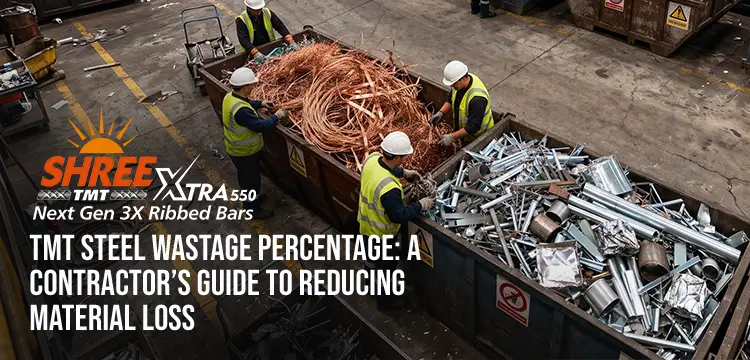
If you depend upon a site engineer to let you know how much steel goes to waste on a typical project, you’ll usually hear a number somewhere between 3% and 5%. On a well-run site it can drop closer to 2%. On a disorganised one, it may quietly climb past 7. That gap might look small on paper, but on a project consuming 100 tonnes of TMT bars, it can mean several tonnes of steel you paid for and never used.
The good news is that most of this loss is avoidable. It just needs a bit of planning before the first bar gets cut.
Where the Steel Actually Goes
TMT bars usually arrive in 12-metre lengths. Your beams, columns and slabs rarely need bars in neat multiples of 12, so every cut leaves an offcut. Some of those pieces get reused. Many end up in a scrap pile behind the site office.
Then there’s rework. A bar bent at the wrong angle, or cut a few centimetres short, often can’t be saved. Add rusting of TMT bars from open storage, bars going missing overnight, and over-generous lap lengths “just to be safe”, and you can see how the numbers creep up.
Start With a Proper Bar Bending Schedule
A bar bending schedule (BBS) is the single most useful tool for cutting waste. It lists every bar by diameter, shape, cut length, and quantity before work begins. With that in hand, your team can plan cuts so that the leftover from one bar becomes a stirrup or a short bar somewhere else, rather than scrap.
Some contractors now use simple cutting-optimisation software for this. Even a well-organised spreadsheet does a decent job.
Store Bars So That You Can Use Them
Keep bars off the ground on wooden sleepers or a raised platform, ideally under a cover. Stack them by diameter and tag each bundle. It sounds basic, but mixed-up stacks lead to the wrong bar being cut, and moisture over a monsoon season can leave you with corroded material the engineer won’t approve of.
Check What You’re Receiving
TMT bars are generally bought by weight, so it pays to weigh deliveries and compare them against the invoice. IS 1786 sets permissible tolerances on mass per metre, and a quick check at the gate helps you confirm you’re getting what you paid for.
Quality Matters More Than People Think
Here’s something that often gets overlooked. A good share of site wastage comes from bars that crack at the bend, have inconsistent ribs, or fail a TMT bar bend test. When that happens, the bar is useless no matter how carefully you planned the cut.
This is where the grade and make of your steel really count. As part of the TMT manufacturing process, Well-made TMT bars go through controlled quenching and tempering, which gives them a tough outer surface and a ductile core. In practice, that means they bend cleanly without cracking, so your fabricators get it right the first time.
Getting it right with Shree TMT
Shree TMT’s Fe 550D bars are manufactured in line with IS 1786 and BIS standards, with the ductility and consistency that site teams rely on for clean bending and fewer rejections. Pair that with a solid BBS and sensible storage, and you’ll see the difference in your scrap pile and in your margins.