The Different Types and Properties of Bricks: A Complete Guide

What Are Bricks?

Bricks are fundamental building materials that have shaped construction for millennia. These rectangular blocks, manufactured from various raw materials, serve as the backbone of residential, commercial, and industrial structures worldwide. A brick’s primary function is to provide structural strength, thermal insulation, and aesthetic appeal to buildings. Modern bricks are engineered to meet specific construction requirements, offering varying degrees of strength, water resistance, and durability depending on their composition and manufacturing process.

Types of Bricks Used in Construction

  1. Burnt Clay Bricks

The most traditional type, burnt clay bricks are made from clay molded into blocks and fired in kilns at temperatures exceeding 1000°C. These bricks offer compressive strength ranging from 3.5 to 35 N/mm² and are ideal for load-bearing walls. Their natural composition provides excellent fire resistance, good thermal insulation, and durability that can last centuries.

  1. Fly Ash Bricks

An environmentally sustainable option, fly ash bricks utilize industrial waste (fly ash from thermal power plants) mixed with cement, sand, and water. These bricks are lighter, stronger, and more uniform than traditional clay bricks. They offer superior water resistance, better thermal insulation, and are cost-effective while reducing environmental impact.

  1. Concrete Bricks

Manufactured from concrete with various aggregates, these bricks provide high compressive strength and can be produced in multiple sizes and finishes. Concrete bricks excel in sound insulation and are perfect for facades, fencing, and partition walls. Their precise dimensions ensure consistent construction quality.

  1. Sand Lime Bricks

Created by mixing sand and lime under high pressure and steam curing, these calcium silicate bricks feature a smooth gray finish and uniform appearance. They offer exceptional load-bearing capacity, accurate dimensions, and superior fire resistance. Their smooth surface often eliminates the need for plastering, reducing finishing costs.

  1. Engineering Bricks

Specifically designed for demanding applications, engineering bricks possess high compressive strength and minimal water absorption. Available in Class A and Class B varieties, they’re essential for foundations, damp-proof courses, retaining walls, and underground construction where moisture resistance is critical.

Why Choosing the Right Brick Matters

Selecting the appropriate brick type is crucial for construction success and long-term building performance. The right choice directly impacts structural integrity, ensuring your building can safely bear loads and withstand environmental stresses. Quality bricks also enhance energy efficiency through proper thermal insulation, reducing heating and cooling costs over the building’s lifetime.

Durability is another critical factor—choosing suitable bricks for your climate and application prevents premature deterioration, water damage, and costly repairs. The right brick selection also affects your project budget, balancing initial material costs with long-term maintenance expenses and energy savings.

Whether you’re building a residential home, commercial structure, or industrial facility, understanding these brick types and their properties ensures you choose the right material for lasting, quality construction. Quality bricks, combined with proper construction techniques and reinforcement like TMT bars, create structures that stand the test of time.
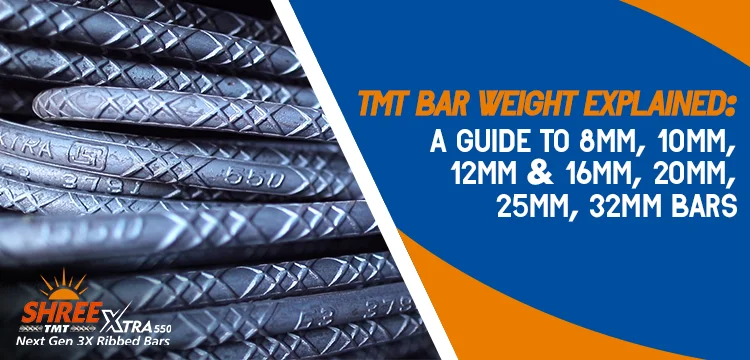
TMT Bar Weight Explained: A Guide to 8mm, 10mm, 12mm & 16mm, 20mm, 25mm, 32mm Bars

When planning a construction project, understanding TMT bar weights is crucial for accurate material estimation, budget planning, and structural integrity. Whether you’re building a residential home or a commercial complex, knowing the weight specifications of different TMT bar sizes helps you make informed decisions and avoid costly miscalculations.

Understanding TMT Bar Weight Calculation

TMT (Thermo-Mechanically Treated) bar weight is calculated using a standard formula based on the bar’s diameter. The weight per meter is determined by the formula: Weight (kg/m) = (D² × 0.00617), where D is the nominal diameter in millimeters. This calculation is based on the density of steel, which is approximately 7,850 kg/m³.

Standard TMT Bar Weights Per Meter

Here’s a comprehensive breakdown of the most commonly used TMT bar sizes and their corresponding weights:

  • 8mm TMT Bar: Weighing 0.395 kg per meter (or 4.74 kg per standard 12-meter bar), 8mm bars are light-duty reinforcements ideal for non-load-bearing structures. They’re commonly used in staircases, railings, column rings, and small slabs where heavy load-bearing isn’t required.
  • 10mm TMT Bar: At 0.617 kg per meter (or 7.4 kg per 12-meter bar), 10mm bars are versatile and suitable for medium-load structures. They work well for smaller beams, columns, and residential construction, striking an excellent balance between strength, flexibility, and cost-effectiveness.
  • 12mm TMT Bar: Weighing 0.888 kg per meter (or 10.66 kg per 12-meter bar), 12mm bars are the standard choice for heavy-duty construction. They’re extensively used in large beams, columns, and slabs that bear significant loads in both residential and commercial buildings.
  • 16mm TMT Bar: At 1.578 kg per meter (or 18.96 kg per 12-meter bar), 16mm bars provide superior strength for industrial buildings, bridges, and heavy foundations. They’re indispensable for large-scale projects requiring exceptional durability and stability.
  • 20mm TMT Bar: Weighing 2.469 kg per meter, 20mm bars provide robust reinforcement for heavy-load structures, including high-rise buildings, bridges, and industrial complexes.
  • 25mm TMT Bar: At 3.854 kg per meter, 25mm bars are used for critical structural elements requiring maximum strength, such as foundation work in tall buildings and heavy infrastructure projects.
  • 32mm TMT Bar: The heaviest commonly used size at 6.313 kg per meter, 32mm bars are reserved for extreme load-bearing applications, including dams, bridges, and massive industrial structures.

Beware of Light-Weight Bars: A Critical Quality Concern

An alarming practice among some unscrupulous manufacturers is the production of “light” material—bars that don’t meet the specified weight and diameter standards. These substandard bars pose serious risks to structural safety and can compromise the entire integrity of your construction project.

What Buyers Must Verify:

  • Per Meter Weight Compliance: Always verify that the actual weight per meter of the TMT bar matches BIS (Bureau of Indian Standards) specifications. Any deviation from standard weights could indicate inferior quality material.
  • Diameter Accuracy: Check that the actual diameter of the bar is not less than the specified size. Even a small reduction in diameter significantly reduces the load-bearing capacity and can lead to structural failures.
  • Documentation: Demand proper test certificates and mill test reports that confirm compliance with IS 1786 standards.

The Shree TMT Commitment: At Shree TMT, we guarantee that our bars 100% conform to all requisite BIS standards and industry norms. We never compromise on quality, ensuring every bar meets or exceeds the specified weight and diameter requirements. Our rigorous quality control processes and adherence to IS 1786 standards mean you can trust our products for the structural integrity and safety of your projects.

Why Weight Matters in Construction

Understanding TMT bar weights is fundamental to construction success for several critical reasons:

  • Accurate Material Estimation: Knowing precise weights helps you order the exact quantity needed, reducing material waste and keeping projects on schedule. This is especially important when calculating requirements for different structural elements.
  • Cost Control: Since steel often represents a significant portion of construction budgets, accurate weight calculations help you budget precisely and compare supplier pricing effectively, avoiding unnecessary overspending.
  • Structural Safety: Bar weight directly indicates load-bearing capacity. Using the correct weight and size ensures your structure can safely support intended loads over its lifetime, meeting engineering specifications.
  • Compliance with Standards: Building codes mandate specific reinforcement requirements. Accurate weight measurements ensure adherence to IS 1786 and other relevant standards, thereby preventing legal issues and ensuring the structural integrity of the product.

Choosing the Right TMT Bar Size

Selecting the appropriate TMT bar size depends on your project requirements, structural design, and load calculations. Always consult with a structural engineer to determine the optimal bar sizes for your specific construction needs.

At Shree TMT, we provide high-quality TMT bars in all standard sizes, manufactured to meet IS 1786 standards, ensuring superior strength, ductility, and durability for your construction projects.

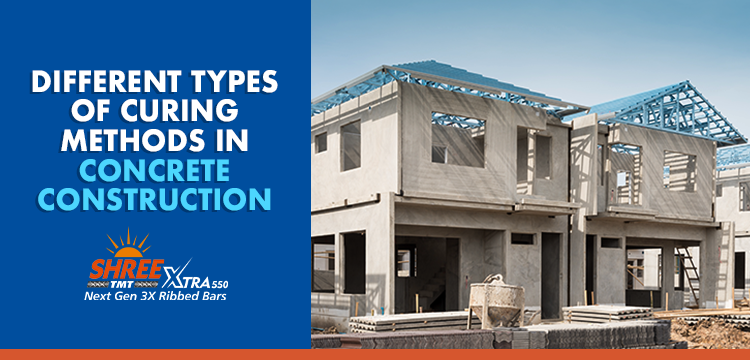
Different Types of Curing Methods in Concrete Construction

Proper curing is one of the most critical factors in achieving strong, durable concrete structures. The curing process involves maintaining adequate moisture and temperature conditions to allow concrete to reach its full strength potential and develop desired properties. Understanding various curing methods helps construction professionals select the most appropriate technique for their specific project requirements.

Why Curing Matters

Concrete curing directly impacts the final strength, durability, and performance of structures. Properly cured concrete can achieve up to 50% higher compressive strength compared to inadequately cured concrete. The hydration process, which gives concrete its strength, requires sufficient moisture and favorable temperature conditions to continue effectively for weeks after placement.

Following are the various methods of curing:

  • Water Curing: Water curing techniques are among the most effective methods for maintaining optimal moisture levels during the curing process.
  • Ponding and Immersion: This method involves covering concrete surfaces with water, creating pools or ponds. It’s highly effective for horizontal surfaces like slabs and pavements, providing continuous moisture supply and temperature control through evaporation.
    • Continuous Sprinkling: Water is continuously sprayed over concrete surfaces using sprinkler systems. This method works well for vertical surfaces and provides excellent temperature control, making it ideal for hot weather conditions.
    • Wet Covering: Concrete surfaces are covered with water-saturated materials like burlap, canvas, or specialized curing blankets. This economical method ensures consistent moisture retention and is suitable for various structural elements.
  • Membrane Curing: Membrane curing methods create barriers to prevent moisture loss from concrete surfaces through various covering materials.
    • Liquid Membrane Compounds: Chemical curing compounds are sprayed onto concrete surfaces, forming a thin film that prevents moisture loss. These compounds are available in different types including resin-based, wax-based, and chlorinated rubber formulations. They’re particularly useful for large areas and vertical surfaces where water curing is impractical.
    • Sheet Membranes: Plastic sheets, waterproof papers, or specialized membranes are placed over concrete surfaces. This method provides excellent moisture retention and is cost-effective for large horizontal areas.
  • Steam Curing: Steam curing accelerates the hydration process by providing both heat and moisture. This method is commonly used in precast concrete manufacturing, allowing for faster strength gain and reduced production cycles. Steam curing can help concrete achieve significant strength within 24 hours.
  • Formwork Curing: Leaving formwork in place during the initial curing period helps retain moisture and maintain favorable temperature conditions. The formwork acts as insulation and prevents rapid moisture loss from concrete surfaces. This method is particularly effective for vertical elements like walls, columns, and beams, where the formwork naturally provides protection during the critical early curing period.
  • Electrical Curing: This specialized method uses electrical heating elements to maintain optimal curing temperatures. It’s particularly valuable in cold weather conditions where maintaining proper curing temperatures is challenging. Electrical curing provides precise temperature control and uniform heating.
  • Hot Water Curing: Similar to steam curing, hot water curing involves circulating heated water around concrete elements. This method is often used for precast elements and provides controlled curing conditions with excellent strength development.

Choosing the Right Method

The selection of a curing method depends on several factors, including project size, structural requirements, weather conditions, available resources, and economic considerations. Water curing methods generally provide the best results, but may not always be practical. Membrane curing offers convenience and cost-effectiveness for large projects, while accelerated methods like steam curing are ideal when rapid strength gain is required.

Quality concrete construction requires careful attention to curing practices. By selecting and implementing appropriate curing methods, construction professionals can ensure their projects achieve optimal strength, durability, and long-term performance, ultimately delivering superior value to clients and end-users.

At Shree TMT, we understand that exceptional concrete structures require both high-quality reinforcement and proper construction practices. While our premium TMT bars provide the structural backbone with superior strength and corrosion resistance, proper curing techniques ensure that the concrete matrix surrounding our reinforcement achieves its full potential. Together, quality TMT bars and effective curing practices create structures that stand the test of time, delivering lasting value and safety for generations to come.

10 Essential Tests for Cement Quality Assessment: Ensuring Superior Construction Standards

Quality cement forms the backbone of any durable construction project. To ensure customers receive only the finest cement products, various standardized tests are conducted to evaluate cement quality parameters. Here are ten crucial tests that determine the quality and reliability of cement.

1. Fineness Test

The fineness test measures the particle size of cement, which directly affects its hydration rate and strength development. Finer cement particles provide greater surface area for hydration, leading to faster setting and higher early strength. This test is typically conducted using the Blaine air permeability apparatus or by sieving through standard sieves. Optimal fineness ensures better workability and durability of concrete structures.

2. Setting Time Test

Setting time determines how quickly cement begins to harden after mixing with water. The initial setting time indicates when the cement paste starts losing plasticity, while the final setting time shows when it completely hardens. This test uses the Vicat apparatus and helps contractors plan their construction activities effectively. Proper setting time ensures adequate working time for placement and finishing operations.

3. Compressive Strength Test

This fundamental test evaluates the cement’s ability to withstand compression forces. Standard cement cubes are prepared, cured for specific periods (typically 3, 7, and 28 days), and tested under controlled conditions. Compressive strength directly correlates with the structural capacity of concrete elements and serves as a primary quality indicator for cement performance.

4. Soundness Test

The soundness test checks whether cement undergoes excessive volume changes after setting, which could lead to cracking and structural failure. Le Chatelier’s apparatus is commonly used for this test, measuring expansion when cement is exposed to accelerated conditions. Sound cement ensures dimensional stability and prevents destructive expansion in hardened concrete.

5. Consistency Test

Consistency determines the water content required to produce a cement paste of standard consistency. Using the Vicat apparatus, this test establishes the baseline for other cement tests and helps determine optimal water-cement ratios for different applications. Proper consistency ensures uniform mixing and optimal strength development.

6. Specific Gravity Test

This test measures the density of cement particles, typically ranging between 3.10 to 3.25 for ordinary Portland cement. Le Chatelier’s flask or pycnometer methods are used to determine specific gravity. This parameter helps in concrete mix design calculations and quality control procedures.

7. Heat of Hydration Test

Heat of hydration measures the thermal energy released when cement reacts with water. Excessive heat can cause thermal cracking in mass concrete structures. This test helps engineers select appropriate cement types for different construction scenarios, particularly important for large concrete pours.

8. Chemical Analysis Test

Chemical composition analysis determines the percentages of various compounds like silicates, aluminates, and alkalis present in cement. This comprehensive analysis ensures the cement meets specified chemical requirements and helps predict performance characteristics.

9. Tensile Strength Test

Though cement is primarily designed for compression, tensile strength testing provides insights into cement’s resistance to pulling forces. This test helps evaluate cement quality for applications where tensile stresses may occur.

10. Durability Tests

Various durability tests assess cement’s resistance to environmental factors like sulfate attack, chloride penetration, and carbonation. These tests predict long-term performance under adverse conditions, ensuring structures maintain integrity throughout their service life. Understanding these essential cement quality tests empowers construction professionals to make informed decisions when selecting materials for their projects. At Shree TMT, as leading manufacturers of high-quality TMT bars, we recognize that superior cement quality is crucial for maximizing the performance of our steel reinforcement products. The synergy between quality cement and premium TMT bars creates the foundation for durable, long-lasting structures. By ensuring both materials meet stringent quality standards, we contribute to building India’s infrastructure with uncompromising strength and reliability.

12+ Most Valuable Components of Building Structure [Updated 2025]

When constructing any building, understanding the essential structural components is crucial for ensuring safety, durability, and functionality. Modern construction demands careful consideration of each element that contributes to a structure’s integrity. Here are the most valuable components that form the backbone of any successful building project.

1. Foundation Systems

The foundation serves as the critical base that transfers the entire building’s load to the ground. Whether it’s a shallow foundation for lighter structures or deep foundations for high-rises, this component determines the building’s stability and longevity. Proper foundation design prevents settlement issues and structural failures.

2. TMT Steel Reinforcement Bars

TMT (Thermo-Mechanically Treated) steel bars are indispensable for reinforced concrete construction. These bars provide tensile strength to concrete structures, making them resistant to earthquakes, corrosion, and extreme weather conditions. Quality TMT bars ensure structural integrity for decades.

3. Concrete Mix and Quality

High-grade concrete forms the structural skeleton of modern buildings. The concrete mix design, including proper cement-to-aggregate ratios and water content, directly impacts the structure’s compressive strength and durability.

4. Structural Framing System

Whether steel frame, reinforced concrete frame, or hybrid systems, the structural frame distributes loads throughout the building. This includes beams, columns, and load-bearing walls that work together to maintain structural stability. Beams serve as horizontal structural elements that transfer loads from slabs to columns, forming the backbone of multi-story construction.

5. Roofing and Roof Structure

The roof system protects the entire structure from environmental elements while contributing to the building’s structural load distribution. Modern roofing systems incorporate thermal insulation, waterproofing, and wind resistance features.

6. Floor Systems and Slabs

Floor slabs and supporting systems carry live and dead loads while providing horizontal stability to the structure. These concrete slabs work in conjunction with supporting beams to create a robust floor system that ensures comfort, safety, and structural continuity between levels. Proper slab design is crucial for managing deflection and crack control.

7. Load-Bearing Walls

These walls carry structural loads from floors and roofs to the foundation. Strategic placement of load-bearing walls is essential for optimal load distribution and spatial planning.

8. Seismic and Wind Resistance Features

Modern buildings incorporate earthquake-resistant design elements and wind load considerations. This includes base isolators, dampers, and flexible connection systems that allow structures to withstand natural forces.

9. Drainage and Waterproofing Systems

Proper drainage prevents water accumulation that could compromise structural integrity. Waterproofing membranes and drainage systems protect foundations and basements from moisture damage.

10. Structural Joints and Connections

Expansion joints, construction joints, and various connection systems allow for thermal movement while maintaining structural continuity. Quality connections ensure load transfer between different structural elements.

11. Staircase and Vertical Circulation

Staircases must be structurally sound to handle heavy traffic loads while serving as emergency egress routes. Proper staircase design contributes to overall building safety.

12. Thermal and Structural Insulation

Insulation systems not only provide energy efficiency but also protect structural components from temperature fluctuations that could cause expansion and contraction damage.

Additional Critical Components

Fire Protection Systems

Fireproofing materials and systems protect structural steel and concrete from high-temperature damage.

Quality Control Measures

Regular testing and inspection of materials ensure that all components meet specified standards throughout construction.

Conclusion

Building a structure that stands the test of time requires careful attention to each of these components. From the foundation to the roof, every element plays a vital role in creating safe, durable, and functional buildings. Investing in quality materials and proper construction techniques for these components ensures long-term structural performance and occupant safety.

At Shree TMT, we understand the critical importance of superior TMT steel bars in modern construction. Our high-grade TMT bars are engineered to meet the demanding requirements of today’s structural projects, offering exceptional strength, flexibility, and corrosion resistance. With our commitment to quality and innovation, Shree TMT provides the reliable foundation your construction projects deserve.

For your next construction project, prioritize these essential components and choose reliable suppliers who understand the critical nature of structural building materials. Partner with Shree TMT for TMT steel bars that deliver uncompromising quality and performance.

The Role of TMT Bars in Dams and Hydropower Projects: Essential Steel Reinforcement for Critical Infrastructure

Dam construction and hydropower projects represent some of the most challenging engineering endeavors, that require the highest quality materials to ensure safety, longevity, and performance.. A fundamental component that holds these complicated structures together is the TMT (Thermo-Mechanically Treated) bars, which often go unnoticed but play an indispensable role. These reinforcement steel bars form the backbone of concrete structures in dams and hydropower facilities, making them essential for India’s growing energy infrastructure.

Why High-Grade TMT Bars are Essential for Dam Construction

Modern dam construction demands steel reinforcement that can withstand extreme hydraulic pressures, seismic forces, and environmental stresses. TMT steel bars provide the crucial tensile strength that concrete structures require, transforming ordinary concrete into a composite material capable of handling massive water loads and ground movements.

The superior mechanical properties of quality TMT bars include high yield strength, like Fe 550 grade, excellent ductility, and enhanced bendability. These characteristics make TMT reinforcement bars indispensable for concrete dam construction, where structural failure is not an option.

Corrosion Resistance: Key Advantage in Hydropower Applications

Water infrastructure projects face unique challenges related to moisture exposure and chemical attack. Premium TMT bars offer superior corrosion resistance compared to conventional mild steel reinforcement, thanks to their specialized manufacturing process that creates a protective pearlitic-ferritic microstructure.

This corrosion-resistant property is particularly valuable in hydropower plant construction, where steel reinforcement remains in contact with water throughout the structure’s operational life. The ribbed surface design of TMT bars also ensures optimal concrete bonding, preventing water ingress and further enhancing durability.

TMT Bar Applications in Hydropower Infrastructure Development

Beyond primary dam structures, TMT steel reinforcement plays vital roles throughout hydropower facility construction:

  • Foundation Systems: TMT bars reinforce powerhouse foundations and turbine pedestals, providing stability for heavy machinery installations.
  • Water Conveyance Structures: Penstock supports, intake towers, and spillway channels rely on TMT reinforcement for structural integrity.
  • Seismic Resistance: The earthquake-resistant properties of TMT bars are crucial for hydropower projects in seismically active regions.
  • Surge Chambers and Tailrace: These critical components require high-strength TMT reinforcement to handle dynamic water pressures.

Quality Standards and Specifications

For dam and hydropower applications, TMT bars must comply with stringent quality standards including IS 1786:2008 and relevant BIS specifications. These standards ensure that the bars can withstand the unique stresses encountered in hydraulic structures, including fatigue loading from water level fluctuations and dynamic forces from turbine operations.

Economic Benefits of Premium TMT Reinforcement

Using high-quality TMT bars in dam construction provides long-term economic advantages through reduced maintenance requirements, extended service life, and enhanced structural reliability. The superior fatigue resistance of TMT steel helps structures withstand repetitive loading from water level fluctuations and operational cycles.

Conclusion: Shree TMT’s Superior Steel Solutions for Critical Infrastructure

For dam construction and hydropower projects demanding uncompromising quality, Shree TMT bars deliver exceptional performance through advanced manufacturing processes and rigorous quality control. Our TMT bars exceed IS 1786:2008 standards, featuring superior tensile strength, enhanced corrosion resistance, and optimal ductility ratios essential for hydraulic structures.

Shree TMT’s commitment to consistent quality, precise chemical composition, and uniform mechanical properties makes our reinforcement bars the ideal choice for all infrastructure projects. With proven track records, Shree TMT bars ensure structural integrity, longevity, and safety for these vital national assets that power India’s growing economy.

7+ Different Types of Foundations in Construction in 2025

The foundation is arguably the most critical component of any construction project, serving as the backbone that transfers structural loads to the ground safely. With advancing construction technologies and evolving soil conditions, understanding the different types of foundations has become essential for builders, engineers, and property developers in 2025. Here’s a comprehensive guide to the major foundation types transforming modern construction.

1. Strip Foundations (Continuous Footings)

Strip foundations remain one of the most popular choices for residential construction. These continuous concrete strips run along the entire length of load-bearing walls, distributing weight evenly across the ground. They’re particularly effective for buildings with consistent wall loads and stable soil conditions. Modern strip foundations often incorporate reinforced steel bars for enhanced durability and load-bearing capacity.

2. Pad Foundations (Isolated Footings)

Ideal for column-based structures, pad foundations are individual concrete blocks placed under each column or structural point. These square or rectangular foundations are cost-effective for buildings with isolated loads and are commonly used in commercial and industrial construction. Their modular nature makes them adaptable to various soil conditions and building requirements.

3. Raft Foundations (Mat Foundations)

When dealing with weak soil conditions or heavy structural loads, raft foundations provide excellent solutions. These large concrete slabs extend across the entire building footprint, distributing loads over a maximum area. Raft foundations are particularly valuable for high-rise buildings, preventing differential settlement and providing superior structural stability.

4. Pile Foundations

For challenging soil conditions or heavy load requirements, pile foundations offer unmatched support. These deep foundations transfer loads to stronger soil layers or bedrock through vertical structural elements. Modern pile systems include driven piles, bored piles, and helical piles, each suited for specific ground conditions and load requirements.

5. Combined Footings

When individual pad foundations aren’t practical due to space constraints or property boundaries, combined footings support multiple columns through a single foundation element. These rectangular or trapezoidal foundations optimize space utilization while maintaining structural integrity, making them popular in urban construction projects.

6. Cantilever Footings (Strap Footings)

Cantilever footings connect an exterior column foundation to an interior one using a connecting beam or strap. This design prevents the exterior footing from extending beyond property lines while ensuring proper load distribution. They’re essential for boundary wall construction and space-constrained urban projects.

7. Caisson Foundations

Large-diameter deep foundations, such as caissons, are constructed by excavating or drilling shafts and filling them with concrete. These foundations excel in supporting heavy loads and are commonly used for bridges, high-rise buildings, and marine structures. Modern caisson construction techniques ensure precision and reliability even in challenging ground conditions.

8. Grillage Foundations

Primarily used for heavy steel column loads, grillage foundations consist of steel beam layers in perpendicular directions, encased in concrete. They’re particularly effective when shallow foundations aren’t sufficient but deep foundations aren’t necessary, offering an intermediate solution for moderate load requirements.

2025 Foundation Technology Innovations

The foundation construction landscape is experiencing revolutionary changes in 2025. Building Information Modeling (BIM) has evolved beyond 3D design tools to become essential for foundation planning, enabling precise soil analysis and load calculations before construction begins.

  • Digital twin technology is transforming foundation monitoring, providing real-time analytics and predictive maintenance capabilities. These virtual replicas help engineers identify potential foundation issues early, saving both time and resources while ensuring long-term structural integrity.
  • Internet of Things (IoT) sensors embedded in foundations now monitor settlement, moisture levels, and structural stress in real-time, providing unprecedented insights into foundation performance throughout a building’s lifecycle.
  • Smart Foundation Systems: Modern foundations in 2025 incorporate smart technologies that enhance performance and longevity. AI-powered soil analysis systems provide more accurate foundation recommendations, while robotic construction techniques ensure precise installation and quality control.
  • Artificial Intelligence helps with foundation planning and safety protocols, optimizing foundation design based on site-specific conditions and environmental factors. This technology integration reduces construction risks and improves overall project efficiency.

Choosing the Right Foundation in 2025

Selecting the appropriate foundation type now involves advanced digital tools and data-driven decision making. Construction firms are updating their IT infrastructure to take advantage of new technologies, ensuring foundation choices are based on comprehensive analysis rather than traditional methods alone.

Modern construction practices emphasize sustainable materials, climate-resilient designs, and integration with smart building systems. Quality TMT steel reinforcement remains crucial for foundation durability, with enhanced specifications to meet evolving environmental and structural demands.

Building Tomorrow’s Foundations with Shree TMT

At Shree TMT, we understand that superior foundations require superior steel reinforcement. Our high-grade TMT bars are engineered to meet the demanding requirements of modern foundation systems, from traditional strip footings to advanced smart foundations integrated with IoT monitoring systems.

With decades of expertise in steel manufacturing, Shree TMT combines time-tested metallurgical processes with cutting-edge quality control technologies. Our TMT bars offer exceptional tensile strength, superior bendability, and enhanced corrosion resistance – essential properties for foundations that must withstand diverse soil conditions and environmental challenges.

How to Maintain Steel Quality in Large-Scale Industrial Production [2025]

In the industrial landscape, maintaining consistent steel quality during large-scale production remains a critical challenge that directly impacts project success, safety, and profitability. As construction and infrastructure demands continue to grow globally, steel manufacturers must adopt comprehensive quality control strategies to meet stringent industry standards while maintaining production efficiency.

Raw Material Selection and Control

The foundation of superior steel quality begins with meticulous raw material selection. Modern steel production facilities must implement rigorous inspection protocols for incoming materials, ensuring that iron ore, scrap metal, and alloying elements meet precise chemical composition requirements. Advanced spectroscopic analysis equipment enables real-time assessment of raw material quality, preventing substandard inputs from compromising the entire production batch.

Establishing strong partnerships with reliable suppliers and maintaining detailed material traceability systems helps manufacturers track quality parameters throughout the supply chain. This proactive approach minimizes variability and ensures consistent steel properties across large production volumes.

Advanced Process Control Systems

Contemporary steel manufacturing relies heavily on automated process control systems that monitor and adjust critical parameters in real-time. Temperature control during melting, casting, and rolling phases must be precisely maintained to achieve the desired microstructure and mechanical properties. Modern electric arc furnaces and basic oxygen furnaces incorporate sophisticated monitoring systems that track chemical composition, temperature profiles, and processing times.

Implementation of Statistical Process Control (SPC) methodologies enables manufacturers to identify process variations before they impact final product quality. These systems continuously collect data from multiple production stages, providing operators with immediate feedback to make necessary adjustments.

Optimizing Chemical Composition for Target Steel Grades

Achieving precise chemical composition is fundamental to producing steel that meets specific grade requirements. Carbon content must be carefully controlled to balance strength and ductility, while elements like manganese, silicon, and sulfur require precise ratios to optimize mechanical properties. Modern steelmaking utilizes advanced ladle metallurgy stations where micro-alloying elements such as vanadium, niobium, and titanium are added in controlled amounts to enhance strength and grain refinement.

Real-time chemical analysis during the steelmaking process allows for immediate composition adjustments, ensuring each heat meets target specifications before casting. Oxygen activity control and deoxidation practices are critical for achieving clean steel with minimal inclusions, directly impacting the final product’s performance characteristics.

Maximizing Yield Efficiency and Production Output

Optimizing yield rates while maintaining quality requires strategic focus on minimizing material losses throughout the production chain. Heat-to-heat chemistry consistency reduces the need for reprocessing and grade downgrades, directly improving overall yield percentages. Implementing precise cutting and sizing protocols minimizes end crop losses and off-specification material generation.

Strike rate optimization involves maintaining consistent production schedules while ensuring first-pass quality acceptance. This requires coordinating raw material availability, furnace scheduling, and downstream processing capacity. Advanced planning systems that integrate quality forecasting with production scheduling help maximize throughput while maintaining stringent quality standards.

Quality Testing and Inspection Protocols

Comprehensive testing protocols form the backbone of quality assurance in large-scale steel production. Regular sampling and testing at multiple production stages ensure that tensile strength, yield strength, elongation, and chemical composition meet specified standards. Non-destructive testing methods, including ultrasonic testing and magnetic particle inspection, help identify internal defects without compromising product integrity.

Modern facilities employ automated testing equipment that can process multiple samples simultaneously, reducing testing time while maintaining accuracy. Digital documentation systems ensure complete traceability of test results, facilitating quick identification and resolution of quality issues.

Manufacturing Excellence Through Proven Industry Practices

Implementing world-class manufacturing practices requires establishing standardized operating procedures that emphasize both quality and efficiency. Preventive maintenance programs for critical equipment, such as continuous casting machines and rolling mills, prevent unexpected downtime while ensuring consistent product dimensions and surface quality. Energy management systems optimize power consumption during peak production periods while maintaining process stability.

Integration of Industry 4.0 technologies, including IoT sensors and predictive analytics, enables proactive identification of potential quality issues before they impact production. Digital twin technology allows manufacturers to simulate process changes and optimize parameters without disrupting actual production, leading to improved quality outcomes and reduced trial-and-error approaches.

Workforce Development and Continuous Improvement

Maintaining steel quality requires ongoing commitment to process improvement and workforce development. Regular training programs ensure that operators understand quality requirements and can identify potential issues early. Implementation of lean manufacturing principles helps eliminate waste while maintaining focus on quality objectives.

Establishing feedback loops between production, quality control, and customer service teams enables continuous refinement of processes based on real-world performance data. This collaborative approach drives innovation and helps manufacturers stay ahead of evolving industry requirements.

Conclusion

Maintaining steel quality in large-scale industrial production requires a comprehensive approach that integrates precise chemical control, yield optimization, and proven manufacturing practices. At Shree TMT, we implement these industry-leading practices through our state-of-the-art manufacturing facilities, rigorous quality control systems, and continuous investment in advanced technology. Our commitment to maintaining the highest steel quality standards ensures that every TMT bar we produce meets and exceeds industry specifications, providing our customers with reliable, high-strength reinforcement solutions for their critical construction projects.

What is Rolling Margin in TMT Bars and Why It Matters in Construction?

When it comes to construction projects, the quality and precision of TMT bars (Thermo-Mechanically Treated bars) play a crucial role in ensuring structural integrity. One technical specification that significantly impacts the performance of reinforcement steel is the rolling margin – a critical parameter that construction engineers and contractors must understand for safe, durable building construction.

Understanding Rolling Margin in TMT Steel Bars

Rolling margin refers to the permissible deviation in the nominal diameter of TMT bars during the steel manufacturing process. According to Indian Standards (IS 1786:2008), reinforcement TMT bars are allowed a specific tolerance range in their diameter, which is expressed as a percentage of the nominal diameter. This margin accounts for the natural variations that occur during the steel rolling process in TMT bar manufacturing.

For construction materials like TMT bars, if you purchase 12mm reinforcement steel, the actual diameter might vary slightly within the prescribed rolling margin limits. This variation is not a manufacturing defect but a standard allowance that ensures consistent production while maintaining structural requirements for building construction.

The rolling margin calculation for TMT reinforcement steel follows a straightforward formula:

Rolling Margin = (Actual Diameter – Nominal Diameter) / Nominal Diameter × 100

Step-by-Step Calculation Process:

  1. Measure the actual diameter at multiple points along the TMT bar using precise measuring instruments
  2. Take the average of these measurements to get the actual diameter
  3. Apply the formula to calculate the percentage deviation

Rolling Margin Standards as Per IS 1786:2008

The Indian Standard IS 1786:2008 specifies the following rolling margin tolerances for TMT steel bars:

  • For reinforcement bars up to 20mm diameter: +3% to -5%
  • For steel bars above 20mm diameter: +3% to -3%

These tolerance limits for construction materials mean that:

  • A 12mm TMT bar can have an actual diameter ranging from 11.4mm to 12.36mm
  • A 25mm reinforcement steel bar can have an actual diameter ranging from 24.25mm to 25.75mm

The standard also specifies that the cross-sectional area calculated from the actual diameter should not be less than 95% of the nominal cross-sectional area, ensuring structural integrity is maintained even with dimensional variations in building construction.

Why Rolling Margin Matters in Construction Projects

Structural Calculations and Load-Bearing Capacity

Rolling margin directly affects the cross-sectional area of TMT bars, which influences the load-bearing capacity of reinforced concrete structures. Construction engineers must account for these variations when calculating structural requirements to ensure safety margins are maintained throughout building construction projects.

Cost Implications for Construction Materials

Understanding rolling margin helps contractors and builders make informed purchasing decisions for construction materials. TMT bars with tighter tolerances might cost more but provide better predictability in structural calculations. Conversely, reinforcement steel with wider margins might be more economical but require careful consideration during design phases.

Quality Control and Compliance

Rolling margin serves as a quality control parameter for construction materials. Reputable TMT bar manufacturers like Shree TMT maintain strict adherence to IS 1786:2008 standards, ensuring that their steel bars consistently fall within prescribed tolerance limits. This consistency is crucial for maintaining structural integrity across large construction projects.

Regular testing and quality checks verify that manufactured TMT bars meet the specified rolling margin requirements, with particular attention to ensuring the cross-sectional area remains above the 95% threshold mandated by the standard.

Compliance with IS 1786:2008 Standards

Adherence to IS 1786:2008 rolling margin standards is mandatory for all TMT bar manufacturers in India. These standards ensure uniformity across the construction industry and provide engineers with reliable parameters for structural design. When reinforcement steel consistently meets these tolerance requirements, it guarantees predictable performance in concrete structures.

Impact on Construction Projects

When TMT bars exceed the rolling margin limits, several issues can arise in building construction. Oversized steel bars may create problems during concrete placement, while undersized reinforcement bars might compromise structural strength. Both scenarios can lead to construction project delays, increased costs, and potential safety concerns.

Professional construction engineers and contractors must verify that their TMT bar suppliers consistently deliver construction materials within the specified rolling margin. This verification process involves regular testing and quality checks to ensure compliance with national standards for reinforcement steel.

Choosing the Right TMT Bars for Construction

When selecting TMT bars for construction projects, it’s essential to partner with manufacturers who maintain rigorous quality control measures for their construction materials. Shree TMT’s commitment to precise manufacturing processes ensures that our steel bars consistently meet rolling margin specifications, providing builders with reliable reinforcement steel for their projects.

Conclusion

Rolling margin in TMT bars represents more than just a technical specification – it’s a critical factor that influences structural safety, cost-effectiveness, and construction project success. By understanding and prioritizing this aspect of construction materials, building professionals can make informed decisions that contribute to constructing stronger, safer structures.

5+ Different Tests to Ensure the Best Quality TMT Bars in 2025

When it comes to construction projects, the foundation of structural integrity lies in choosing the right TMT (Thermo-Mechanically Treated) bars. As we advance through 2025, ensuring the highest quality standards for TMT bars has become more critical than ever. Here are the essential tests that guarantee you’re investing in superior TMT bars for your construction needs.

1. Tensile Strength Test

The tensile strength test remains the gold standard for evaluating TMT bar quality. This test measures the maximum stress a bar can withstand while being stretched before breaking. High-grade TMT bars should demonstrate consistent tensile strength values that meet or exceed IS 1786:2008 standards. The test involves pulling a sample bar until it fractures, providing crucial data about its load-bearing capacity and overall structural reliability.

2. Bend Test for Ductility Assessment

Ductility determines how well TMT bars can bend without cracking or breaking under stress. The bend test involves bending a bar sample around a mandrel to specific angles. Quality TMT bars should maintain their integrity even when bent to 180 degrees, demonstrating excellent flexibility for earthquake-resistant construction. This test is particularly vital for structures in seismic zones where flexibility can mean the difference between survival and collapse.

3. Re-bend Test for Long-term Durability

The re-bend test takes the bend test one step further by straightening a previously bent bar and then bending it again. This simulates real-world conditions where TMT bars may experience repeated stress cycles. Superior quality bars should pass this test without showing signs of cracking or structural weakness, ensuring long-term durability in dynamic construction environments.

4. Chemical Composition Analysis

Modern TMT bars undergo rigorous chemical analysis to ensure optimal composition. This test examines the percentage of carbon, sulfur, phosphorus, and other elements that directly impact the bar’s strength and corrosion resistance. The ideal chemical composition enhances weldability while maintaining structural integrity, making this test indispensable for quality assurance.

5. Corrosion Resistance Testing

With environmental factors becoming increasingly aggressive, corrosion resistance testing has gained paramount importance in 2025. This test evaluates how well TMT bars withstand moisture, salt, and other corrosive elements over extended periods. Advanced testing methods now include accelerated corrosion tests that simulate decades of exposure in controlled laboratory conditions.

6. Weight Variation and Dimensional Tolerance Test

Consistency in manufacturing is crucial for construction precision. This test ensures that TMT bars meet specified weight and dimensional requirements within acceptable tolerance limits. Uniform diameter, consistent rib patterns, and accurate weight per meter are indicators of superior manufacturing processes and quality control.

7. Fatigue Test for Cyclic Loading

Modern construction demands TMT bars that can withstand repeated loading and unloading cycles without failure. The fatigue test subjects bars to millions of stress cycles, simulating years of structural use. This test has become increasingly important as building designs become more complex and dynamic loads more common.

Conclusion

Investing in TMT bars that pass these comprehensive tests ensures your construction projects meet the highest safety and durability standards. At Shree TMT, we subject every batch of our TMT bars to these rigorous quality assessments, guaranteeing that you receive products that exceed industry expectations and provide lasting structural integrity for your valuable investments.

TMT CALCULATOR