How Proper Rib Patterns in TMT Bars Improve Concrete Bonding

In modern construction, the strength of a structure depends not just on design, but also on how well steel reinforcement bonds with concrete. One of the most critical elements in this connection is the rib pattern on TMT bars (Thermo-Mechanically Treated bars). Though they may seem like a small detail, rib patterns significantly enhance the structural integrity, durability, and bonding strength of concrete structures.

What Are Rib Patterns in TMT Bars?

Rib patterns are geometrically engineered protrusions on the surface of TMT bars. Far from being decorative, these features are designed to mechanically interlock the steel with the surrounding concrete, improving performance in every structural application—from buildings and bridges to industrial infrastructure.

Why Rib Patterns Matter in Concrete Bonding

1.  Enhanced Bond Strength with Concrete

Unlike smooth bars, ribbed TMT bars provide better anchorage by creating multiple points of contact. These ribs function like micro-anchors, increasing the pull-out resistance and ensuring that the bars remain firmly embedded within the concrete under stress or shifting loads.

2.  Efficient Stress Distribution

Proper rib design enables uniform stress transfer between steel and concrete. The ribs spread applied loads across a wider surface area, reducing stress concentration and minimizing the risk of cracking or failure in the structure.

3.  Corrosion Protection

Strong bonding also reduces moisture ingress, one of the leading causes of steel corrosion. A tight bond limits the formation of micro-gaps that could allow water or chemicals to reach the steel, making ribbed TMT bars especially effective in coastal and industrial environments.

The Shree TMT Advantage in Rib Design

At Shree TMT, we understand that the rib pattern is not a one-size-fits-all solution. Our revolutionary 3X rib on rib design ensures unbeatable strength that outperforms conventional TMT bars. This innovative design:

  • Reduces the risk of cracking and spalling in concrete structures
  • Minimizes the penetration of moisture and external elements, further preserving structural integrity
  • Creates superior bonding that withstands extreme stress conditions

Our advanced manufacturing process ensures:

  • Precise rib geometry
  • Optimal rib height and spacing
  • Consistent rib pattern across the entire length of the bar
  • Enhanced surface characteristics that maximize concrete adhesion

Key Design Features of Effective Rib Patterns

The efficiency of a rib pattern is determined by multiple engineering factors:

  • Rib height: Affects grip and surface area
  • Rib spacing: Balances bonding strength and stress flow
  • Rib angle: Impacts how loads transfer between steel and concrete
  • Surface roughness: Enhances concrete adhesion
  • Longitudinal and transverse ribs: Improve overall interlock and bonding strength

Shree TMT bars are tested for each of these parameters to deliver consistent performance across projects.

Conclusion: Small Detail, Big Structural Impact

Rib patterns in TMT bars are more than just surface textures—they’re a vital part of your structure’s safety and long-term strength. When you choose Shree TMT, you choose reinforcement steel that’s scientifically engineered for better bonding, corrosion resistance, and load transfer.
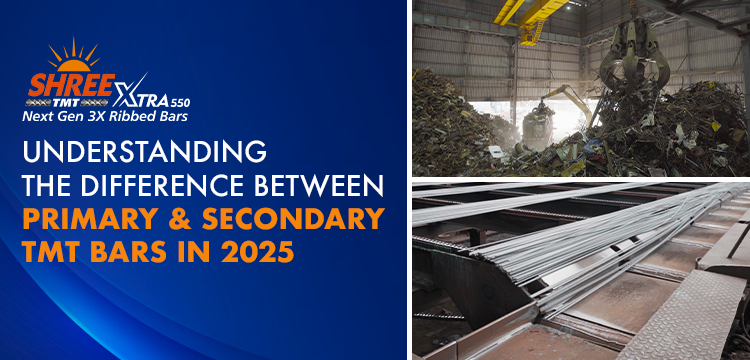
Understanding the Difference Between Primary and Secondary TMT Bars in 2025

In the construction industry, the quality of Thermo-Mechanically Treated (TMT) steel bars plays a crucial role in determining the strength, durability, and safety of structures. As construction technology evolves, it’s essential for builders, engineers, and homeowners to understand the key differences between primary and secondary TMT bars, particularly in the 2025 construction landscape.

Primary TMT Bars: The Traditional Approach

Primary TMT bars are manufactured using iron ore as the primary raw material. This traditional manufacturing process involves:

  1. Ore to Steel Conversion: Iron ore is smelted in blast furnaces to produce molten iron.
  2. Refining Process: The molten iron undergoes refining in basic oxygen furnaces to produce steel.
  3. Rolling and Treatment: The steel is then rolled and subjected to the thermo-mechanical treatment process.

Secondary TMT Bars: The Recycling Revolution

Secondary TMT bars are manufactured using recycled steel rather than iron ore. This approach has gained significant traction due to sustainability concerns and resource conservation efforts. The process includes:

  1. Scrap Collection: Various types of steel scrap are collected and sorted.
  2. Electric Arc Furnace (EAF) Melting: The scrap is melted in electric arc furnaces.
  3. Refining and Rolling: The molten steel undergoes refining before being rolled and thermo-mechanically treated.

While the recycling approach is environmentally friendly, the quality of secondary TMT bars can vary based on the scrap input quality. This is where manufacturers like Shree TMT have made significant advancements, implementing rigorous quality control measures to ensure consistency.

Key Differences in 2025

Raw Material Source

  • Primary: Primary TMT bars utilize virgin iron ore extracted from mines, which requires extensive processing to convert to steel.
  • Secondary: Secondary TMT bars are produced from recycled steel, giving new life to previously used steel products and reducing waste.

Manufacturing Process

  • Primary: The manufacturing of primary TMT bars follows a longer production chain that begins with blast furnaces for iron extraction, continues through basic oxygen furnaces for steel making, and concludes with the rolling mill process.
  • Secondary: Secondary TMT production employs a more direct approach using electric arc furnaces to melt the collected scrap, followed by the rolling mill process, which typically requires less energy and fewer steps.

Environmental Impact

  • Primary: The production of primary TMT bars generates a significantly higher carbon footprint due to ore extraction, transportation, and the energy-intensive smelting process that consumes substantial natural resources.
  • Secondary: Secondary TMT manufacturing substantially reduces the environmental burden by utilizing existing materials, consuming less energy, and supporting a circular economy model that extends the lifecycle of steel.

Quality Considerations

  • Primary: Primary TMT bars follow conventional production methods that, while reliable, lack the advanced technological scrutiny and testing protocols that have been developed specifically for modern secondary steel production.
  • Secondary: Secondary TMT bars benefit from cutting-edge manufacturing technologies and rigorous quality control systems that enable premium manufacturers like Shree TMT to produce bars with precisely engineered properties that consistently meet or exceed industry standards, often with enhanced adaptability to specific construction requirements.

Choosing the Right TMT Bars for Your Project

When selecting TMT bars for construction in 2025, consider these factors:

  1. Structural Requirements: Both types can meet BIS standards when properly manufactured.
  2. Environmental Goals: Secondary TMT bars offer significant sustainability advantages.
  3. Manufacturer Reputation: Choose established manufacturers with proven quality control systems.

The Shree TMT Advantage

In the secondary TMT bar market, not all manufacturers maintain the same standards. Shree TMT has distinguished itself by implementing advanced technologies and stringent quality control measures that address the inherent challenges of secondary steel production.

Their process includes:

  • Ultra-precise scrap sorting and cleaning technologies
  • Advanced impurity detection systems
  • Strict chemical composition monitoring
  • Comprehensive mechanical property testing

By controlling every aspect of the manufacturing process, Shree TMT ensures that their secondary TMT bars deliver performance on par with primary options while maintaining the environmental and cost benefits of recycled steel.

Conclusion

As construction practices evolve in 2025, the choice between primary and secondary TMT bars no longer needs to involve compromises on quality. With manufacturers like Shree TMT setting new standards in secondary steel production, builders can confidently choose environmentally responsible options without sacrificing structural integrity. The key is selecting manufacturers who demonstrate an unwavering commitment to quality throughout the production process.

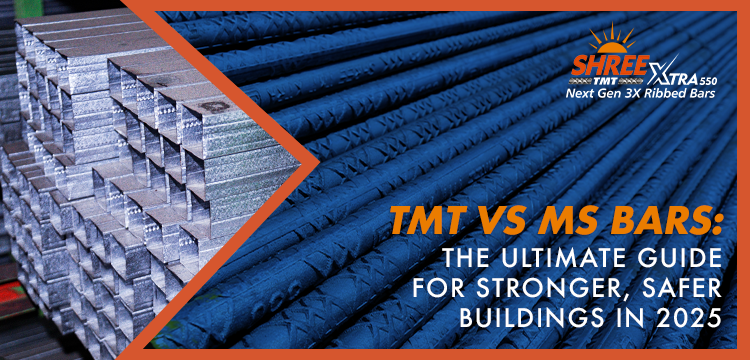
TMT vs MS Bars: The Ultimate Guide for Stronger, Safer Buildings in 2025

The construction industry has witnessed a significant evolution in reinforcement technology over the past few decades. The transition from traditional Mild Steel (MS) bars to Thermo-Mechanically Treated (TMT) bars represents one of the most important advancements in construction materials. This shift began gradually in the 1990s, when the limitations of MS bars became increasingly apparent in modern construction projects that required higher strength and durability. As building codes became more stringent and structural designs more complex, TMT technology emerged as the superior alternative, offering enhanced properties that MS bars couldn’t match.

By the early 2000s, most major construction projects had adopted TMT bars as the standard, and today, they dominate the market due to their superior technical specifications and performance characteristics. This transition reflects the construction industry’s commitment to embracing innovation for safer, more durable infrastructure.

TMT Bars: The Modern Choice

TMT bars represent the evolution of reinforcement technology in construction. These bars undergo a specialized manufacturing process where the outer surface is rapidly cooled while the core remains hot. This creates a tough outer layer with a softer, more ductile core—giving TMT bars their signature combination of strength and flexibility.

The benefits of TMT bars include superior tensile strength, better bendability without brittleness, and excellent resistance to earthquakes due to their high ductility. They also feature enhanced bonding with concrete due to their ribbed surface, which significantly improves the overall strength of reinforced concrete structures.

Another advantage of TMT bars is their corrosion resistance, which extends the lifespan of buildings in various environmental conditions. Modern TMT bars are also weldable, making them versatile for complex construction designs.

TMT bars have become the modern choice for several compelling reasons beyond their technical advantages:

Stringent quality testing has become a cornerstone of TMT production, with manufacturers implementing rigorous in-house quality control measures that were not as prevalent in traditional MS bar manufacturing. These tests ensure consistent performance across batches, providing engineers and builders with reliable materials that meet exact specifications.

The growing global steel market has pushed demand for better and safer products, driving innovation in the TMT sector. As construction projects become more ambitious and safety standards more exacting, the market has naturally gravitated toward superior reinforcement options.

Round MS Bars: The Traditional Option

Round MS bars, also known as mild steel bars, have been used in construction for decades before the advent of TMT technology. These bars are manufactured through hot rolling processes without the specialized cooling techniques used for TMT bars.

MS bars have a smooth surface compared to the ribbed surface of TMT bars, resulting in less effective bonding with concrete. They generally offer lower yield strength and tensile strength compared to TMT bars, which can limit their application in modern high-rise buildings and critical infrastructure.

One advantage of MS bars is their affordability, making them suitable for small-scale or non-structural applications where high strength isn’t a primary requirement.

Key Differences to Consider in 2025

The construction industry has seen several developments in reinforcement bar technology in recent years. When comparing TMT and MS bars in 2025, consider these key differences:

  1. Strength Properties: TMT bars now offer yield strengths of up to 600 MPa, significantly higher than the typical 250-275 MPa of MS bars.
  2. Earthquake Resistance: TMT bars provide superior performance in seismically active zones due to their higher ductility.
  3. Longevity: TMT bars can extend building lifespans by 15-20 years compared to structures using MS bars, due to better corrosion resistance.
  4. Building Code Compliance: Most updated building codes now recommend or require TMT bars for reinforced concrete structures, especially for multi-story buildings.
  5. Micro-alloying Technology: Modern TMT bars are often enhanced with micro-alloying elements like vanadium, niobium, and titanium, which MS bars lack. These trace elements significantly improve mechanical properties, including fatigue resistance, structural integrity under extreme temperatures, and overall tensile strength—crucial advantages in modern construction that traditional MS bars cannot provide.

Shree TMT: Engineering Excellence Through Advanced Metallurgy

At Shree TMT, we have perfected the art and science of producing exceptionally strong TMT bars through our proprietary manufacturing process. Our state-of-the-art quenching technology creates the optimal martensitic structure in the surface layer while maintaining a perfect ferrite-pearlite core. This, combined with our careful selection of raw materials and precision in micro-alloying compositions, results in exceptionally strong TMT bars. Our rigorous quality control measures, including comprehensive mechanical testing at every production stage, ensure that builders can rely on Shree TMT bars for the most demanding construction challenges, from high-rise buildings to critical infrastructure projects.

Importance of Raw Material Selection For TMT Bar Construction [2025 Updated]

In 2025, the construction industry stands at a pivotal juncture. The shift towards sustainable construction practices has accelerated dramatically, reflecting a global acknowledgment of the environmental crisis we face. This sustainability imperative has become more than a trend—it’s now an essential consideration for all stakeholders in the construction ecosystem, from architects and engineers to manufacturers and end-users.

Environmental Impact of Conventional Steel Production

Traditional steel manufacturing contributes significantly to global environmental challenges, representing approximately 7% of worldwide carbon emissions. Conventional production methods, particularly those utilizing blast furnaces, consume enormous energy resources and raw materials. The production of a single ton of steel through primary manufacturing methods results in nearly two tons of carbon dioxide released into the atmosphere, placing substantial strain on environmental resources and accelerating climate change concerns.

The Secondary Steel Revolution

As an answer to mounting environmental pressures, the secondary steel production pathway has gained prominence as a viable sustainability solution. This methodology centers on steel scrap recycling, which simultaneously decreases virgin material requirements and lessens the ecological burden. The secondary approach delivers impressive efficiency improvements—consuming 60-70% less energy than primary methods while dramatically reducing carbon emissions.

The Critical Role of Quality Raw Materials in TMT Manufacturing

Steel billets serve as the fundamental input material for TMT bar production, with their quality directly influencing the performance characteristics of the finished TMT Bars. Premium-grade billets deliver consistency, uniformity, and superior metallurgical attributes that enhance the TMT bars’ core properties—strength, flexibility, stretchability, bending capacity, and welding compatibility.

Industry leaders such as Shree TMT have recognized this essential relationship by implementing in-house billet production. This integrated approach yields enhanced metallurgical properties compared to traditional ingot-based methods, resulting in TMT products engineered to endure construction demands. Their controlled manufacturing environment guarantees that each billet meets rigorous quality parameters, ensuring consistent performance across diverse construction applications.

The Synergy of Recycled Materials and Quality

A notable advancement in the recent TMT production ecosystem is the widespread adoption of high-grade recycled steel for billet manufacturing. These premium recycled materials undergo comprehensive processing protocols to eliminate contaminants while preserving the essential characteristics required for construction-grade steel products.

Billets crafted from quality recycled sources not only minimize environmental impact but also deliver exceptional performance metrics. When subjected to proper processing techniques, recycled steel can produce TMT bars with durability and structural integrity comparable to virgin material alternatives while substantially reducing carbon footprint measurements.

Forward-thinking manufacturers are implementing comprehensive sustainability measures throughout their production cycles. These endeavors involve implementing measures such as expanding the utilization of secondary steel by recycling scrap steel, modifying existing recycling techniques to enhance impurity removal (e.g., disassembling vehicles rather than crushing them to facilitate material separation), boosting energy efficiency, and transitioning from carbon-intensive to net-zero technologies.

Conclusion

In the current construction environment, raw material selection for TMT bar production stands as a defining factor in both structural outcomes and environmental stewardship. The quality standards and sourcing decisions for input materials directly determine the integrity and longevity of constructed assets, while simultaneously defining the ecological impact of building activities.

The construction sector successfully balances structural excellence with environmental conservation by emphasizing premium-grade steel billets sourced from quality recycled steel. This integrated approach ensures continued infrastructure development that meets contemporary demands without compromising environmental health for subsequent generations.

The Critical Role of TMT Bars in Bridge and Highway Construction in 2025

In the rapidly evolving infrastructure landscape, Thermo-Mechanically Treated (TMT) bars have become indispensable in bridge and highway construction. As infrastructure projects scale up in complexity and durability requirements, the demand for high-quality TMT bars continues to grow.

Structural Reliability: The Foundation of Modern Infrastructure

The strength and longevity of bridges and highways depend on the quality of materials used in construction. TMT bars play a crucial role in reinforcing these structures, ensuring they withstand dynamic loads, environmental stressors, and the test of time.

Modern TMT bars combine exceptional tensile strength with ductility, a balance critical for infrastructure that endures continuous vehicular movement. The rapid quenching and self-tempering process creates a strong outer layer and a ductile core, enhancing both flexibility and durability. This structural integrity is vital in withstanding seismic activity, extreme weather conditions, and the constant stress of heavy traffic.

Corrosion resistance is another key advantage. Bridges and highways are exposed to moisture, de-icing salts, and pollutants, all of which accelerate material degradation. High-quality TMT bars help mitigate these risks, extending the lifespan of infrastructure and reducing maintenance costs.

Fatigue resistance is equally important, as continuous stress cycles weaken materials over time. With growing traffic volumes worldwide, infrastructure reinforced with premium TMT bars remains stable and reliable for decades.

Evolving Infrastructure Needs in 2025

Infrastructure development in 2025 is driven by multiple factors that mandate the critical need for superior-grade TMT bars.

Governments worldwide continue to invest in large-scale projects to boost economic growth. These ambitious developments require reinforcement materials capable of supporting larger spans and heavier loads.

Climate resilience is now a priority in infrastructure planning. With extreme weather events becoming more frequent, TMT bars with enhanced strength and corrosion resistance play a pivotal role in creating durable, disaster-resistant structures.

Rapid urbanization has further increased the demand for advanced highway networks and interconnected bridges. These projects must be built with longevity in mind, making high-performance TMT bars essential.

Building code standards have evolved, with many countries mandating higher-grade reinforcement materials. Premium TMT bars, meeting Fe 550 and Fe 600 grades, are now the industry standard for critical infrastructure.

Sustainability is another major consideration. Modern TMT manufacturing processes prioritize energy efficiency and incorporate recycled steel scrap, aligning with global efforts to reduce construction-related carbon footprints.

Regulatory Framework in India: Making TMT Bars Essential

India’s infrastructure sector has seen significant regulatory advancements, reinforcing the necessity of high-quality TMT bars in public projects. The Bureau of Indian Standards (BIS) has strengthened guidelines under IS 1786, setting higher benchmarks for reinforcement steel used in bridges and highways.

Key regulatory changes leading into 2025 include:

  • Higher Quality Standards: Fe550 stands as the premier steel grade for critical infrastructure like bridges and highways, especially in high-seismic zones.
  • Mandatory Certification: All TMT bars used in public infrastructure projects must be BIS-certified, ensuring compliance with stringent quality standards.
  • Corrosion Resistance: New durability requirements for TMT bars in coastal regions and high-groundwater areas aim to enhance infrastructure longevity.
  • Sustainable Production: The government has introduced incentives for manufacturers using energy-efficient production methods and recycled materials.
  • Enhanced Quality Control: On-site testing protocols have been strengthened to ensure that only premium-quality TMT bars are used in construction.

With large-scale initiatives like the PM GatiShakti National Master Plan and the National Infrastructure Pipeline, these regulations are expected to become more rigorous, making premium TMT bars a legal necessity in major infrastructure projects.

Conclusion

In 2025, TMT bars are more than just reinforcement materials; they are fundamental to building safe, resilient, and sustainable infrastructure. Their ability to withstand extreme conditions, support high traffic loads, and reduce maintenance costs makes them an invaluable asset in bridge and highway construction.

Investing in superior-grade TMT bars is a commitment to long-term infrastructure durability. As regulatory standards tighten and demands on transportation networks increase, the quality of reinforcement materials will continue to shape the future of infrastructure development.

How to Identify Genuine TMT Bars and Avoid Counterfeit Products [Guide]

Within the construction landscape, the challenge of counterfeit TMT (Thermo-Mechanically Treated) bars concerns every stakeholder in the industry. With structural integrity at stake, knowing how to identify authentic TMT bars is crucial for construction professionals, engineers, and homeowners alike.

Essential Authentication Markers

When purchasing TMT bars, look for these critical identifiers that distinguish genuine products:

BIS Certification Mark: Every authentic TMT bar must carry the mandatory Bureau of Indian Standards (BIS) certification mark with a unique license number. This marking appears at regular intervals along the bar’s length, serving as your first guarantee of authenticity. These license numbers can be verified directly on the Bureau’s official website.

Brand Identification: Genuine TMT bars feature distinct manufacturer branding rolled onto the surface. Look for clear, consistent branding that shows quality manufacturing processes. Be cautious of similar-looking names or slight variations, as these often indicate counterfeit products.

Surface Pattern Analysis: Quality TMT bars are distinguished by precise rib pattern designs. These ribs maintain uniform spacing and depth, creating a consistent geometric pattern throughout the bar’s length. This precision engineering isn’t just for identification – it ensures optimal bonding with concrete for superior structural performance.

Physical Properties and Testing

Authentic TMT bars demonstrate several key physical characteristics:

Weight Conformity: Each diameter of TMT bars must adhere to strict weight specifications. Always verify the weight against standard specifications, available through authorized dealers.

Surface Quality: Genuine TMT bars showcase a distinctive surface finish, resulting from advanced thermal treatment processes. This characteristic appearance helps distinguish quality products from substandard alternatives.

Risks of Using Counterfeit TMT Bars

Using non-genuine TMT bars can lead to severe consequences:

Structural Safety: Counterfeit bars typically lack the engineered strength properties that make genuine TMT bars reliable for construction. This compromises building safety, especially during seismic events or under design loads.

Economic Impact: While counterfeit products might seem cost-effective initially, they result in substantial long-term expenses through repairs, reinforcement requirements, and potential structural failures.

Regulatory Compliance: Non-standard materials can violate building codes, leading to project delays and legal complications that no constructor can afford.

Ensuring Authentic Purchases

To guarantee you’re getting genuine TMT bars:

  1. Source exclusively through authorized dealer networks
  2. Request and maintain proper documentation, including manufacturer test certificates
  3. Verify product authenticity through dealer verification systems
  4. Look for official warranty documentation

Conclusion

Quality in construction isn’t just about meeting standards – it’s about ensuring the safety and longevity of structures that shape our world. At Shree TMT, we understand this responsibility deeply. Our state-of-the-art manufacturing facility produces TMT bars that meet and exceed industry standards, backed by our commitment to quality that spans decades. Shree TMT elevates steel quality by incorporating meticulously chosen additives, fine-tuning its chemical composition, reinforcing its overall excellence, and producing steel that complies with the rigorous IS 1786 (2008) standards. When choosing TMT bars for your next project, remember that the right choice today protects investments and lives for generations to come.

Thermo Mechanical Treatment in Steel: All You Need to Know [2025]

In the constantly evolving landscape of metallurgy, Thermo Mechanical Treatment (TMT) has emerged as a game-changing innovation that has fundamentally transformed the steel industry. As we navigate through 2025, understanding the intricacies of TMT has become essential knowledge for construction professionals and steel enthusiasts alike.

The TMT Process: Engineering Stronger Steel

Thermo Mechanical Treatment is a sophisticated metallurgical process that combines mechanical deformation with precise thermal processing to produce steel with superior properties. The process typically involves three critical stages:

  1. Hot Rolling: The steel billet is heated to temperatures around 1200°C and passed through a series of rollers. This initial deformation breaks down the cast structure and begins to refine the grain.
  2. Controlled Cooling: The hot-rolled bar then enters a carefully engineered cooling zone where the surface layer is rapidly quenched with water, creating a hardened martensitic outer layer while maintaining a hot core.
  3. Self-Tempering: As the bar exits the quenching zone, heat from the still-molten core flows outward, tempering the martensitic layer and creating a perfect balance of hardness and ductility.

This sophisticated process results in a unique microstructure – a tough outer rim surrounding a softer, more ductile core – giving TMT steel its remarkable properties.

Benefits That Revolutionize Construction

The advantages of TMT steel have made it the backbone of modern construction:

  • Enhanced Tensile Strength: TMT rebars exhibit up to 25% higher yield strength compared to conventional hot-rolled bars, allowing for leaner structural designs.
  • Superior Ductility: Despite their strength, TMT bars maintain excellent bendability, crucial for complex architectural designs and seismic-resistant structures.
  • Improved Weldability: The controlled carbon content in TMT steel ensures better fusion during welding operations without compromising structural integrity.
  • Corrosion Resistance: The refined grain structure offers better resistance to environmental degradation, extending the lifespan of structures in aggressive environments.
  • Cost Efficiency: The optimized strength-to-weight ratio translates to material savings of approximately 15-20% in major construction projects.

2025: The Cutting Edge of TMT Innovation

This year has witnessed remarkable advancements in TMT technology:

  • Micro-Alloying Breakthroughs: Recent developments in micro-alloying elements have enabled manufacturers to achieve unprecedented combinations of strength and ductility. The addition of precise amounts of niobium and vanadium has resulted in TMT steel with yield strengths exceeding 600 MPa while maintaining excellent formability.
  • AI-Driven Process Optimization: Artificial intelligence has revolutionized TMT production in 2025. Advanced neural networks now monitor and adjust cooling parameters in real time, ensuring consistent quality while reducing energy consumption.
  • Eco-Friendly TMT Production: Sustainability has become central to TMT manufacturing. New electric arc furnace technologies coupled with renewable energy sources have reduced the carbon footprint of TMT steel production by nearly 40% compared to traditional methods, meeting stringent global environmental standards.
  • Nano-Modified Surface Treatments The latest innovation in TMT steel involves nano-particle surface modifications that enhance bond strength between concrete and reinforcement, significantly improving the durability of reinforced concrete structures in extreme environments.

Impact on Modern Construction

The evolution of TMT steel has directly influenced construction trends in 2025:

  • Ultra-high-rise buildings now utilize advanced TMT rebars that enable structures to reach heights previously thought impossible.
  • Infrastructure projects benefit from extended service life predictions of 100+ years for TMT-reinforced elements.
  • Prefabricated construction elements using high-performance TMT steel have accelerated building timelines by up to 35%.
  • Seismic-resistant designs have become more efficient and economical through the use of specialized TMT reinforcement systems.

As we navigate through 2025, Thermo Mechanical Treatment continues to push the boundaries of what’s possible in steel reinforcement. The combination of traditional metallurgical wisdom with cutting-edge technology ensures that TMT steel remains at the forefront of construction innovation, delivering stronger, safer, and more sustainable structures for generations to come.

Welding vs Lapping of TMT Bars: Which Method Ensures Better Strength?

In construction, the joining of TMT (Thermo-Mechanically Treated) bars is a critical process that directly impacts the structural strength and durability of buildings and infrastructure. Two primary methods dominate this domain: welding and lapping. Each technique brings unique advantages and challenges, making the choice crucial for engineers and construction professionals.

Understanding TMT Bars

TMT bars are the quintessential strength that brings stability, durability, and resilience to modern construction, forming the backbone of reinforced concrete structures through their unique thermo-mechanical properties and superior load-bearing capabilities. These high-strength reinforcement bars are produced through a specialized cooling process that creates a tough outer martensitic shell and a ductile ferrite-pearlite core. This unique microstructure provides exceptional strength, ductility, and corrosion resistance.

Welding: Precision and Complexity

Welding involves directly joining TMT bars by melting and fusing their ends. This method requires specialized skills and equipment, including:

  • Electric arc welding
  • Submerged arc welding
  • Friction welding

Pros of Welding

  • Allows precise connections in tight spaces
  • Useful for complex structural designs
  • Can create continuous, seamless joints

Cons of Welding

  • Risk of altering the bar’s microstructure
  • Potential reduction in strength at the weld point
  • Requires highly skilled welding professionals
  • More expensive due to specialized equipment and labor

Lapping: Simplicity and Reliability

Lapping is a mechanical method where TMT bars are overlapped and tied together using binding wire or other reinforcement techniques. The overlap length is typically 40-50 times the bar’s diameter.

Pros of Lapping

  • Maintains original bar strength
  • Simple and straightforward technique
  • Lower skill requirement
  • Cost-effective
  • Preserves the TMT bar’s inherent metallurgical properties

Cons of Lapping

  • Requires more physical space
  • Limited in extremely compact structural designs
  • Potential for slight misalignment

Strength Comparison: The Critical Factor

Extensive research and structural engineering studies consistently demonstrate that lapping provides superior strength retention compared to welding. The primary reasons include:

  1. Minimal Microstructural Disruption:Lapping doesn’t involve heating, thus preserving the TMT bar’s original martensitic structure.
  2. Uniform Stress Distribution:Overlapped bars distribute loads more evenly, reducing stress concentration points.
  3. Reduced Risk of Metallurgical Defects:Welding can introduce potential weak points due to heat-affected zones.

Selecting the Right Method

The choice between welding and lapping depends on several project-specific factors:

  • Project Complexity: Intricate designs might favor welding. Most useful where there is a need for specialized structural details in seismic zones or high-stress areas.
  • Available Space: Compact structures may require welding. Used in locations with high reinforcement density where lapping would cause congestion.
  • Budget Constraints: Lapping is generally more economical and requires less specialized labor, making it cost-effective for standard construction.
  • Structural Load Requirements: Critical load-bearing structures might prioritize lapping. Useful in critical infrastructure projects like bridges and dams demanding highest quality connections.

Recommendations for Optimal Performance

  1. Prioritize lapping whenever possible
  2. If welding is necessary, employ certified welding professionals
  3. Use appropriate welding techniques that minimize heat impact
  4. Conduct thorough quality checks and non-destructive testing
  5. Follow relevant construction standards and guidelines

Conclusion

While both welding and lapping have their place in construction, lapping emerges as the preferred method for ensuring superior strength in TMT bar connections. By maintaining the bar’s original metallurgical properties and providing uniform stress distribution, lapping offers a reliable, cost-effective solution for most construction projects.

For specific project requirements, consulting with structural engineering experts remains crucial in making the most appropriate choice.

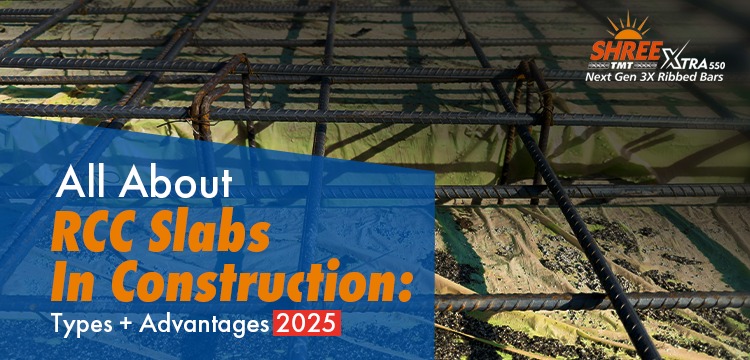
All About RCC Slabs In Construction: Types + Advantages [2025]

Reinforced Cement Concrete (RCC) slabs form the backbone of modern construction, serving as essential horizontal structural elements in buildings. The combination of concrete and high-quality TMT bars creates structures that stand the test of time. Understanding the various types of RCC slabs and their advantages is crucial for engineers, architects, and construction professionals to make informed decisions in their projects.

Types of RCC Slabs

The choice of RCC slab type significantly impacts a building’s structural integrity, cost, and functionality. Each type has unique characteristics that make it suitable for specific applications.

One-Way Slabs

One-way slabs are designed to transfer loads in a single direction, typically spanning between parallel support beams or walls. These slabs are most efficient when the length-to-width ratio exceeds 2:1. Their simpler design makes them economical for smaller spans and residential construction. The TMT bars are primarily placed along the direction of the span, with minimal distribution of steel in the perpendicular direction to ensure optimal load distribution.

Two-Way Slabs

When a slab is supported on all four sides and has a length-to-width ratio of less than 2, it behaves as a two-way slab. These slabs distribute loads in both directions, making them ideal for larger spaces like office buildings and commercial structures. Two-way slabs require high-quality TMT reinforcement in both directions, resulting in better load distribution and reduced deflection.

Flat Slabs

Flat slabs are unique in that they directly rest on columns without intermediate beams. This modern design creates clean ceiling lines and maximizes headroom, making them popular in contemporary architecture. Column capitals or drop panels may be used to enhance shear resistance. The strategic placement of TMT bars in flat slabs is crucial for maintaining structural integrity and preventing punching shear failure.

Waffle Slabs

Also known as coffered slabs, waffle slabs feature a grid of recessed panels, creating a distinctive waffle-like pattern on the ceiling. This design reduces dead weight while maintaining structural depth, enabling longer spans with less material. The complex reinforcement pattern in waffle slabs demands high-quality TMT bars to ensure proper load distribution and structural stability.

Advantages of RCC Slabs

Superior Durability

RCC slabs exhibit exceptional durability, with lifespans often exceeding 50 years under proper maintenance. The synergy between concrete and Shree TMT bars creates a robust structure resistant to weathering, impact, and normal wear and tear. This durability translates to reduced maintenance costs over the building’s lifetime.

Cost-Effectiveness

Despite initial material costs, RCC slabs prove economical in the long run. Their durability minimizes replacement needs, while their versatility reduces labor costs during construction. Using high-quality TMT bars from trusted manufacturers like Shree TMT ensures long-term cost savings by preventing structural issues.

Fire Resistance

RCC slabs provide excellent fire protection, with concrete acting as an effective thermal barrier. The concrete cover protects TMT reinforcement from high temperatures, maintaining structural integrity during fire events. This inherent fire resistance often reduces the need for additional fireproofing measures.

Design Flexibility

The versatility of RCC slabs allows architects and engineers to achieve various design objectives. The adaptability of TMT bars enables complex designs while maintaining structural integrity. This flexibility extends to both aesthetic and functional requirements of modern buildings.

Environmental Performance

RCC slabs contribute to building sustainability through thermal mass properties, helping regulate indoor temperatures and reduce energy consumption. The materials used are typically locally sourced, and the durability of quality TMT bars ensures a longer life cycle for the structure.

The Critical Role of TMT Bars in RCC Slabs

The strength and durability of RCC slabs heavily depend on the quality of TMT bars used in their construction. TMT (Thermo-Mechanically Treated) bars act as the backbone of RCC structures, providing:

  • High tensile strength for better load-bearing capacity
  • Superior ductility for earthquake resistance
  • Excellent bond strength with concrete
  • Uniform strength distribution throughout the structure

Conclusion

Reinforced Cement Concrete (RCC) slabs remain a fundamental element in contemporary construction, offering a perfect balance of structural performance, cost-effectiveness, and design flexibility. The quality of TMT bars used in RCC slabs plays a crucial role in ensuring structural integrity and longevity. Shree TMT, as a leading manufacturer of high-quality TMT bars, provides the essential reinforcement needed for durable and reliable RCC construction. For projects requiring superior structural integrity and long-term durability, choosing Shree TMT bars ensures that your RCC slabs will stand strong for generations to come.

Advanced Construction Techniques in 2025: What Every Builder Should Know

The construction industry is experiencing a revolutionary transformation in 2025, with innovative technologies and sustainable practices reshaping how we build. As the global construction market heads toward an unprecedented $15.5 trillion growth by 2030, staying ahead of these advancements isn’t just an advantage—it’s essential for survival in this competitive landscape.

The Evolution of TMT Bars in Modern Construction

At the heart of modern construction lies the revolutionary TMT (Thermo-Mechanically Treated) bar technology. These high-strength reinforcement bars have become instrumental in creating stronger, more durable structures. What sets contemporary TMT bar production apart is its significant environmental impact through scrap steel recycling. The steel industry has emerged as a pioneer in waste reduction by actively promoting the reuse of ferrous scrap, transforming urban waste management while ensuring structural integrity.

This sustainable approach to steel production not only reduces environmental impact but also ensures superior quality in construction materials. Modern TMT bars offer enhanced strength, ductility, and earthquake resistance—crucial factors in today’s construction landscape.

Revolutionary 3D Printing in Construction

Construction 3D printing has evolved from an experimental technology to a mainstream building method. Large-scale concrete printers now construct basic house structures in mere days, reducing labor costs by up to 60% and minimizing material waste. These printers excel in creating complex geometrical designs that would be challenging and expensive using traditional methods.

The real game-changer is the introduction of multi-material 3D printing systems, allowing simultaneous printing of structural elements and insulation layers. This integration dramatically improves building efficiency and reduces construction time by eliminating multiple separate processes.

Drone Technology and Real-Time Monitoring

In 2025, drone technology has become an indispensable tool in construction management. Advanced drones equipped with AI and machine learning capabilities provide real-time aerial imagery, 3D LiDAR scans, and thermal imaging. This technology enables project managers to:

  • Monitor construction progress with unprecedented accuracy
  • Conduct safety inspections in hard-to-reach areas
  • Create detailed topographical surveys
  • Track material inventory and placement
  • Identify potential issues before they become problems

Modular Construction and Smart Integration

Modular construction has reached new heights with automated factory production lines. Buildings are now assembled in controlled environments, with precision-engineered components that snap together on-site like sophisticated building blocks. This approach has slashed project timelines by up to 50% compared to traditional construction methods.

The latest modular systems feature built-in smart home technology, pre-installed utilities, and standardized connection points, making on-site assembly faster and more reliable. Quality control has improved significantly, with each module undergoing rigorous testing before leaving the factory.

Sustainable Building Materials and Practices

The push for sustainability has led to remarkable innovations in building materials. Self-healing concrete, which uses bacteria to repair cracks automatically, is becoming increasingly common in foundation work. The integration of high-quality TMT bars with these advanced materials creates structures that are not only environmentally conscious but also exceptionally durable.

Carbon-negative materials, such as engineered wood products and recycled steel, are now standard in eco-conscious construction. These materials not only reduce environmental impact but often offer superior performance characteristics.

Smart Construction Technologies and Market Growth

The construction technology market is witnessing unprecedented growth, with an $8 trillion expansion projected by 2030. This growth is driven by the integration of:

  • Building Information Modeling (BIM)
  • Internet of Things (IoT) sensors
  • Artificial Intelligence systems
  • Advanced material science
  • Automated construction equipment

China, the United States, and India are leading this technological revolution, with construction output expected to rise by 85%. This growth is fundamentally linked to technology-driven innovation and sustainability efforts.

Looking Ahead

As we progress through 2025, these advanced construction techniques, combined with sustainable material choices like modern TMT bars, are becoming increasingly accessible and cost-effective. For builders looking to maintain a competitive edge, embracing these innovations isn’t optional—it’s essential. The future of construction lies in the successful integration of these technologies with traditional building expertise, creating structures that are not only more efficient to build but also more sustainable and future-ready.

Remember, staying ahead in the construction industry means continuously learning and adapting to new technologies while maintaining the fundamental principles of quality craftsmanship that have always defined excellent building practices.

TMT CALCULATOR